Tradition
Dances
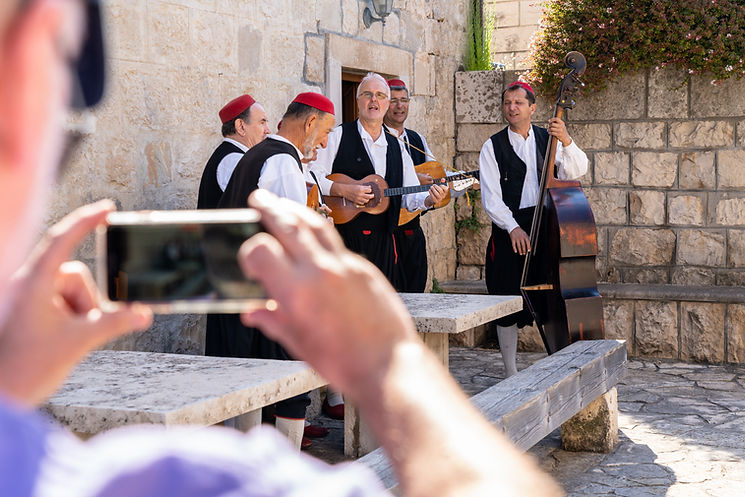
The rhythm of the tamburica, the sound of the lijerica, and steps centuries old
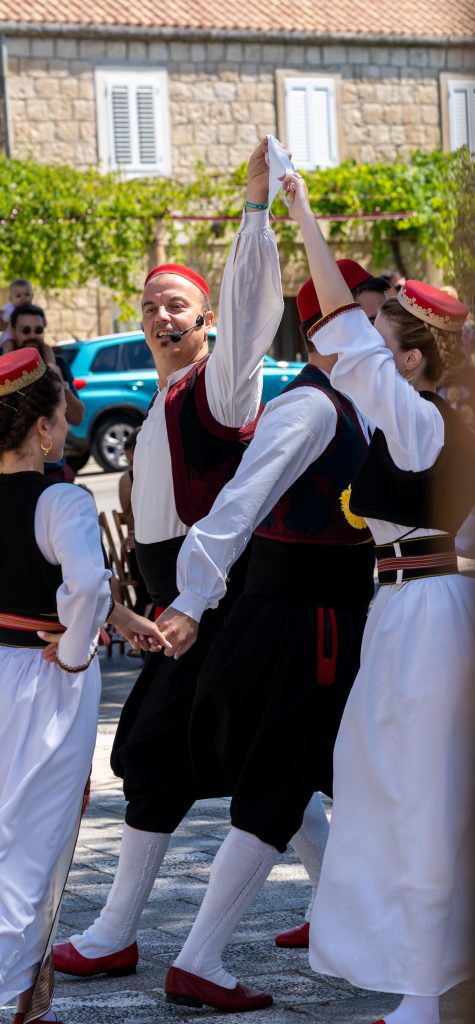
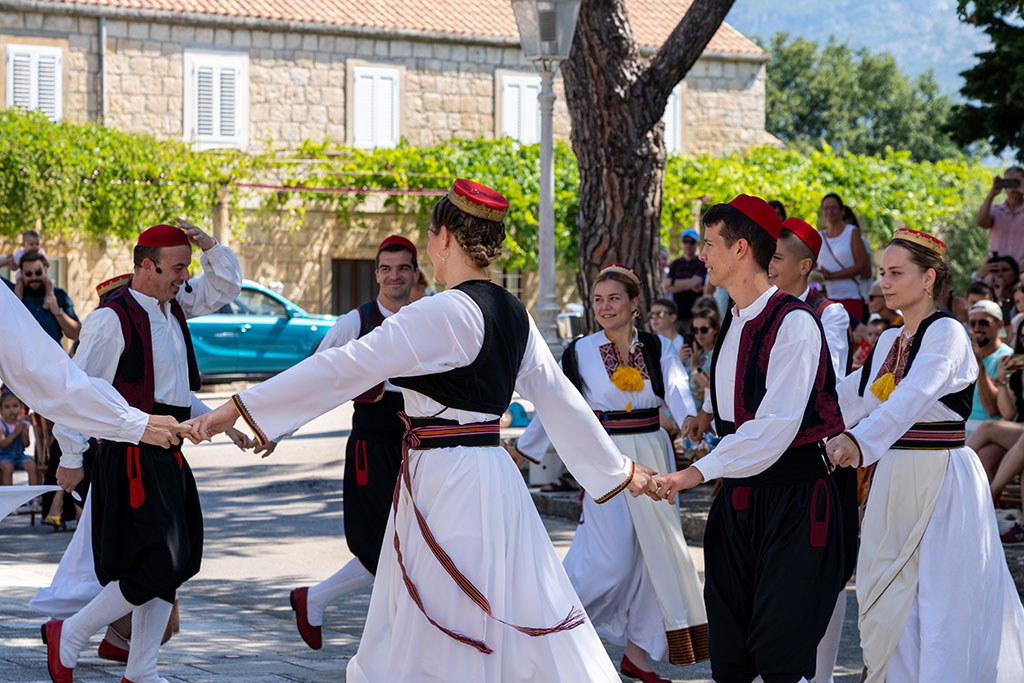
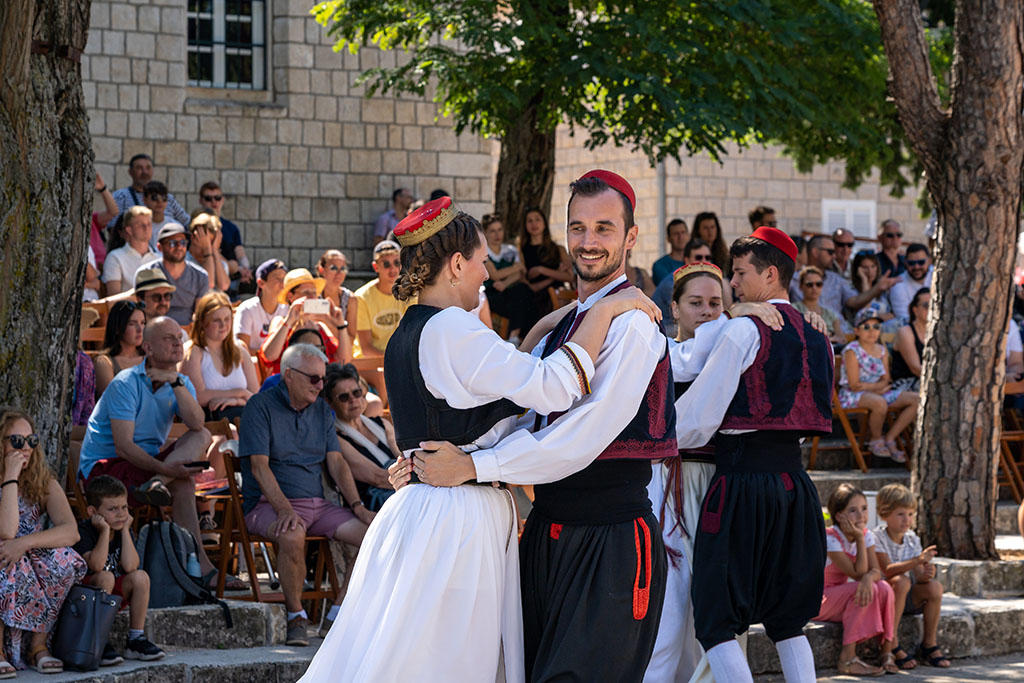
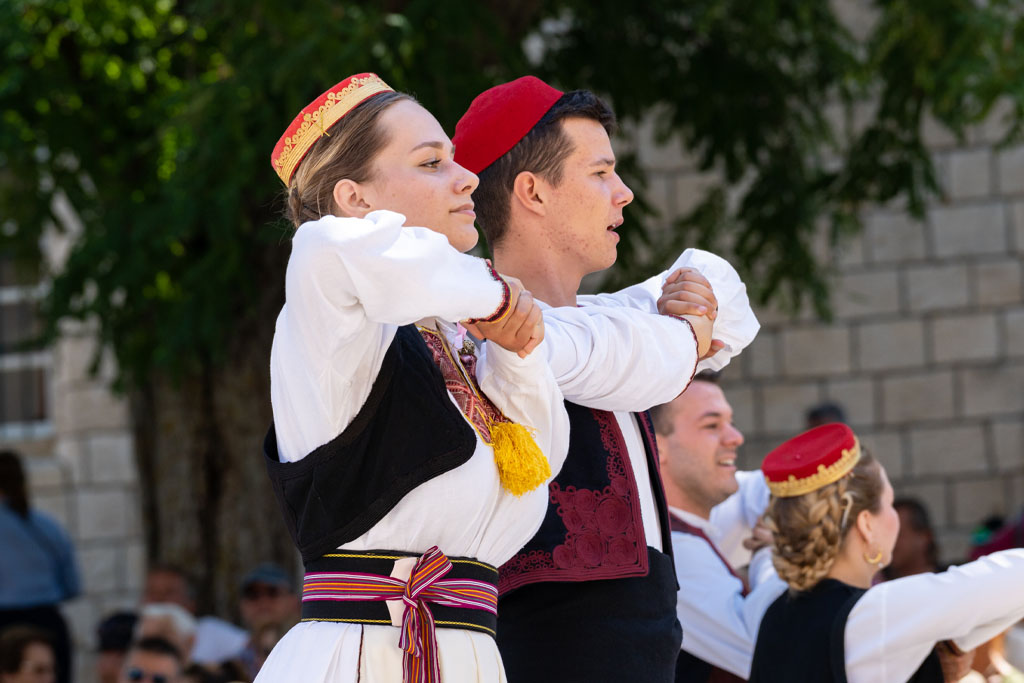
The dances of Konavle represent an important part of the rich cultural heritage of Konavle, the southernmost region of Croatia. They are not merely a form of entertainment, but also a way of expressing identity, community, and a tradition passed down from generation to generation.
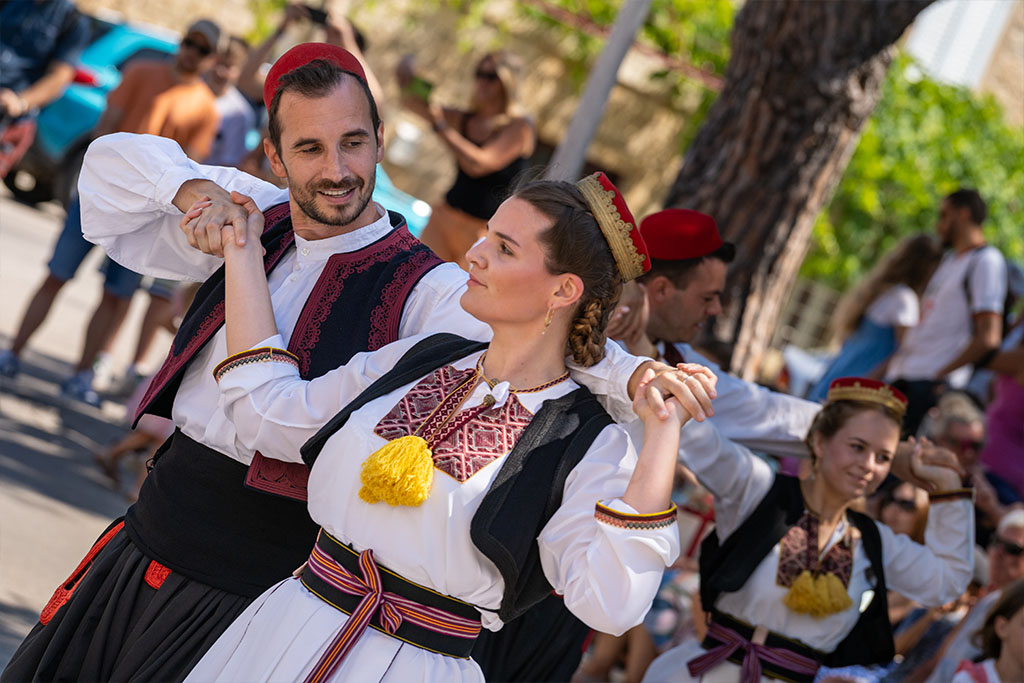
The distinctiveness of Konavle dances lies in their simplicity and elegance. The movements are neither abrupt nor showy, but measured and attuned to the music, reflecting the way of life and mentality of the people of this region. The dances were most often performed on holidays, weddings, and other important social occasions, where they also served to bring the community together.
Today, Konavle dances continue to live on through folklore societies and cultural events, preserving the tradition from being forgotten. They are a valuable part of the intangible heritage and a source of pride for the local population, as well as a fascinating display of traditional culture for all visitors wishing to discover the authentic spirit of Konavle.
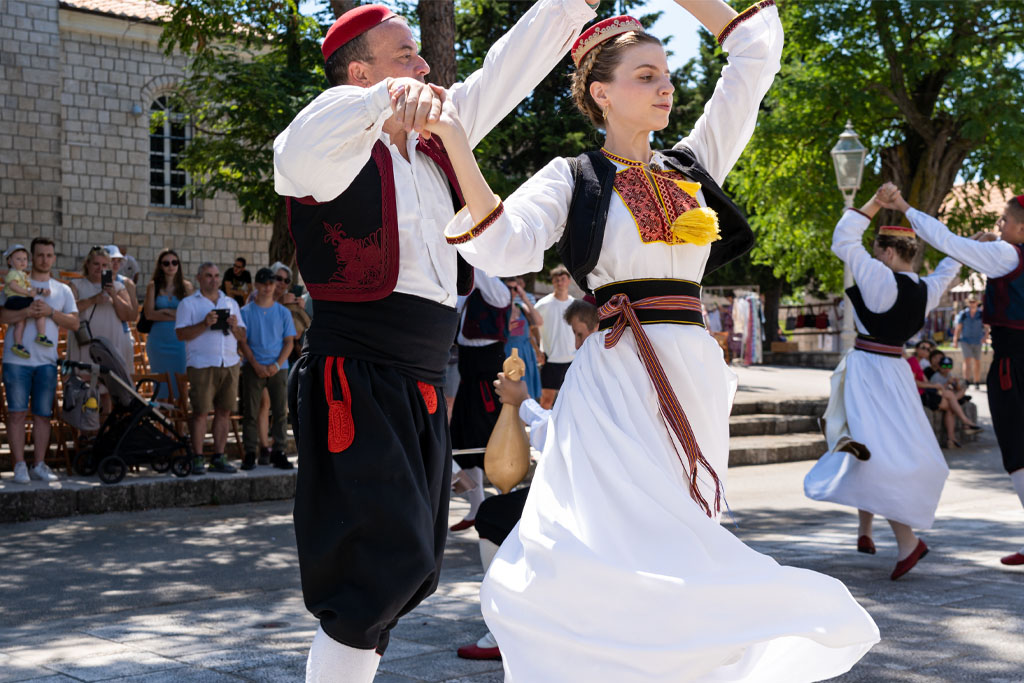
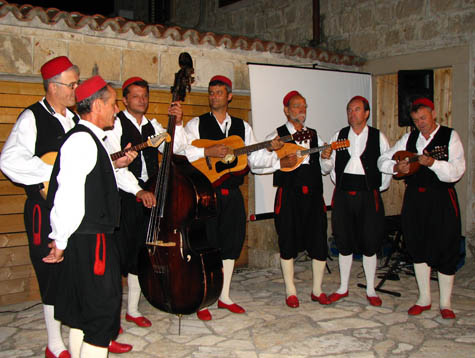
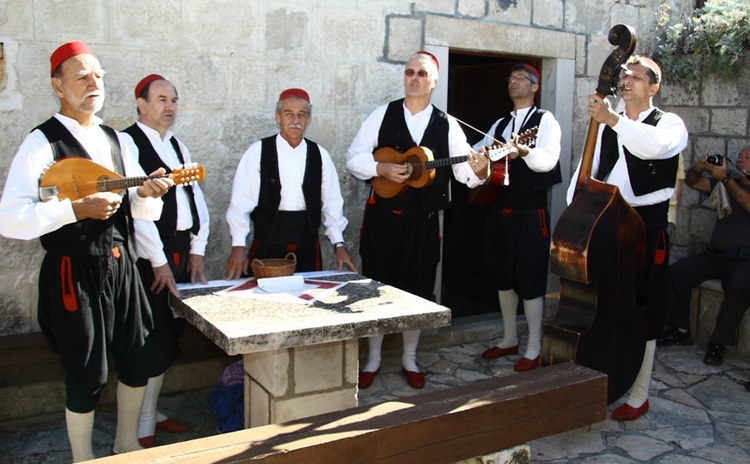
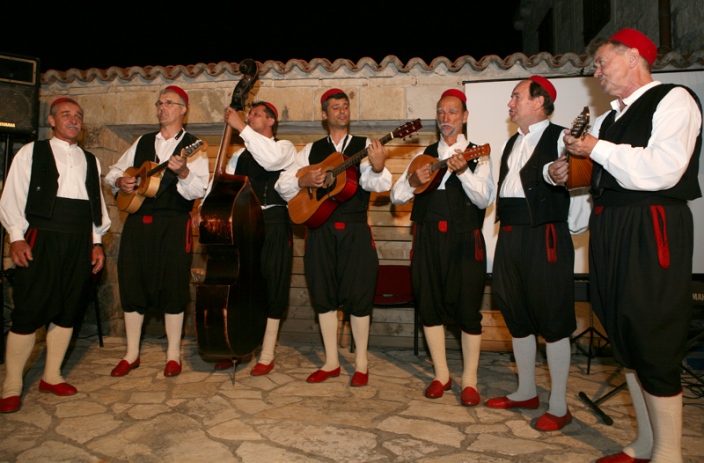
The folklore program in Čilipi showcases the finest dances and music of Konavle. Each dance carries its own story — of love, joy, togetherness, and life in this region.
Potkolo
The Oldest Konavle Circle Dance
Potkolo is a symbol of Konavle tradition. It is danced in a circle, with its steps passed down from generation to generation. This dance opens the folklore performance and unites performers and audience in a shared rhythm.
Potkolo is the oldest dance in Konavle, and likely in the entire Dubrovnik region as well. The name itself comes from the phrase "let's go dance under the circle" ("idemo igrat pod kolo"), referring to dancing in a circle, or — more likely — to the recognizable arch or "bridge" figure formed by the first male and female dancer with their arms, under which the other dancers pass.
Besides that figure, the dance is also distinguished by its characteristic step, in which the dancer places their left foot beneath the right knee. A special atmosphere is added by the song the dancers perform: "Ajmo balat, ajmo pjevat oko ruva nevjestina" ("Let's dance, let's sing around the bride's garment/veil"), which clearly indicates that this is a wedding dance.
Namiguša
The Dance of Courtship and Joy
amed after the act of winking (namigivanje), this dance focuses on the subtle, playful communication between male and female dancers. While the steps are moderate, they require precision and group harmony. It was typically performed during festive occasions once the atmosphere had become relaxed and cheerful.
Čičak
The Liveliest Folklore Dance
An energetic and dynamic performance where young men "snatch" girls to join them in the dance. This playful "theft" creates a spirited atmosphere that remains a favorite for modern audiences.
Poskočica
Strength and Youthful Energy
As the name suggests (derived from poskok, meaning "hop" or "jump"), this is the most spirited of the Konavle circle dances. Characterized by small hops and a fast tempo, it requires significant stamina. Unlike more rigid dances, Poskočica allows for personal expression, giving the impression that the dancers are "flying" from step to step.
Linđo
The Most Famous Dance of the Dubrovnik Region
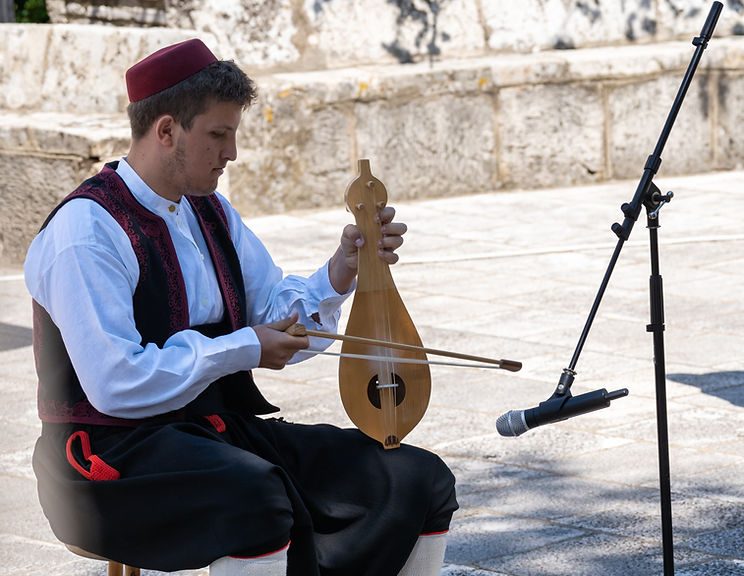
Linđo is the undisputed symbol of regional folklore. The performance centers around two key figures: the Dance Leader (kolovođa) and the Lijerica player (linđo). The lijerica is an ancient three-stringed bowed instrument. The player strikes the rhythm forcefully with his right foot to keep time for the dancers. The dancers move in pairs around the musician. The kolovođa shouts out commands in witty, often double-entendre verses, dictating the figures and pair changes with a loud, rhythmic voice.
Music
Konavle songs and Dalmatian klapa singing form an indispensable part of the musical tradition of southern Croatia. They are deeply rooted in the everyday life, customs, and emotions of the people, carrying stories of love, the sea, family, and homeland.
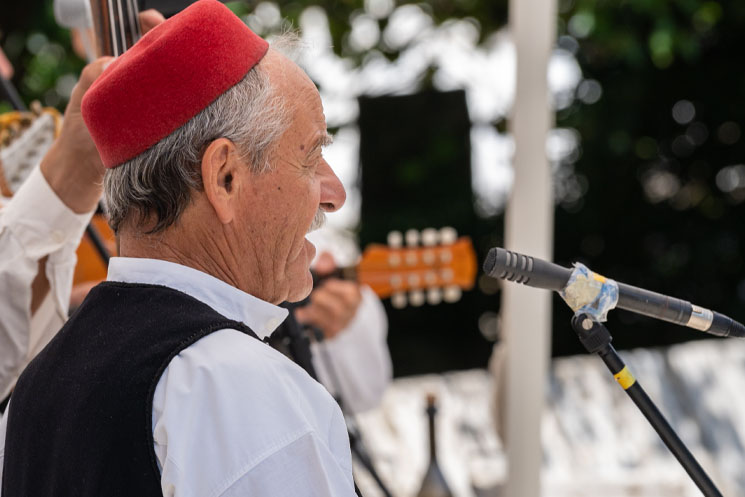
Konavle songs are usually simple yet expressive. They are sung from the heart, often without instrumental accompaniment or with only a very modest musical backing. They are characterized by a clear, powerful vocal and a pronounced melody that follows natural speech.
Thematically, they are tied to rural life, work, customs, and human relationships. They were once sung on various occasions — during fieldwork, family gatherings, weddings, and holidays — and often served as a way of passing down life's wisdom and experience.
Dalmatian klapa, on the other hand, represents a distinctive form of multi-part a cappella singing recognized even beyond Croatia's borders. Klapa singing is based on the harmonious blending of voices, typically in four parts: first tenor, second tenor, baritone, and bass. It is precisely this multi-part harmony that gives klapa its recognizable, warm, and emotive sound.
The klapa repertoire includes love songs and songs about one's homeland, as well as arrangements of traditional melodies. Although klapa originated in coastal towns and villages, its popularity has spread throughout the country, and it still holds an important place in Dalmatia's cultural life today.
Both Konavle songs and Dalmatian klapa bear witness to the richness of oral tradition and a sense of community. Though they differ in how they are performed, they are united by sincerity of expression and a strong connection to the region they come from, making them enduring symbols of Dalmatian cultural heritage.
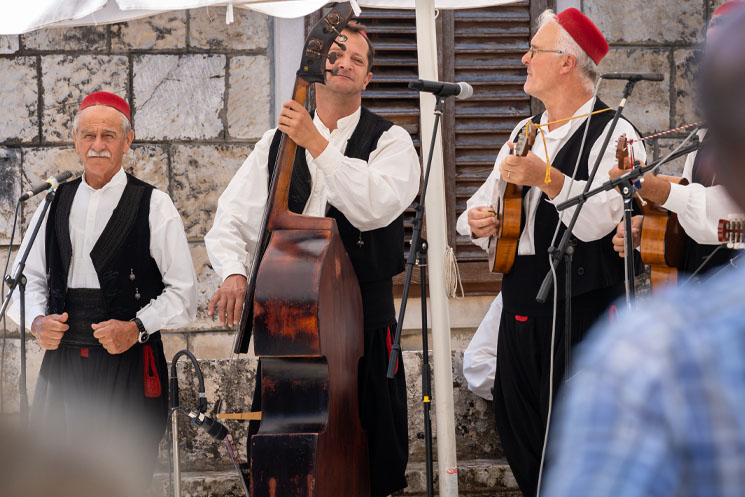
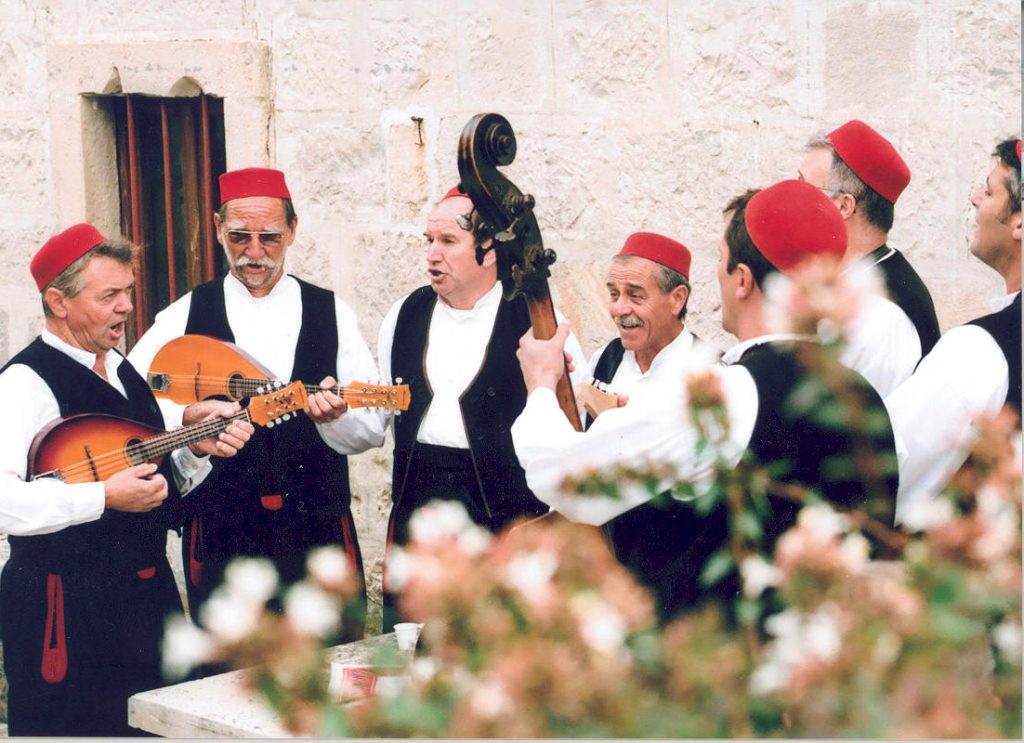
Klapa Čilipi


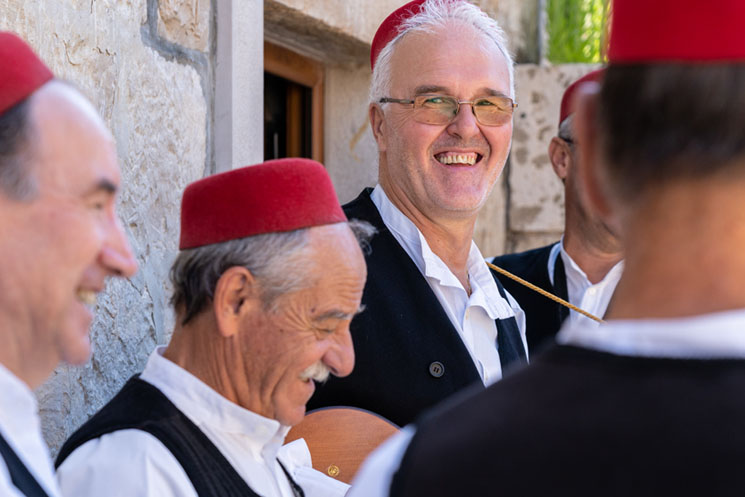
Klapa Čilipi is one of the recognized guardians of traditional singing in Konavle, born from the desire of local song enthusiasts to preserve and pass on their region's rich musical heritage.
From the very beginning, the klapa has been closely tied to the local community. Its members came together primarily out of love for song, and its early performances were linked to church celebrations, folklore events, and the traditional Sunday programs in Čilipi. It was precisely through such performances that the klapa gradually built its recognizable style, drawing on original Konavle melodies as well as the broader Dalmatian klapa repertoire.
The klapa has performed at numerous cultural events and folklore festivals, presenting Konavle and its traditions to a wider audience.
Today, Klapa Čilipi continues to be an important part of Konavle's cultural life. Through its work, it not only nurtures klapa singing but also actively participates in preserving tradition, passing on a love of music to younger generations and keeping the spirit of the Konavle region alive.
Tradicional insturments

Ljerica
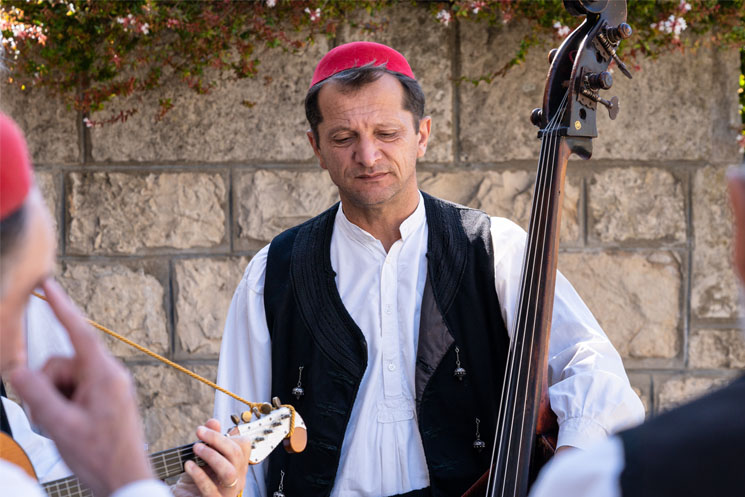
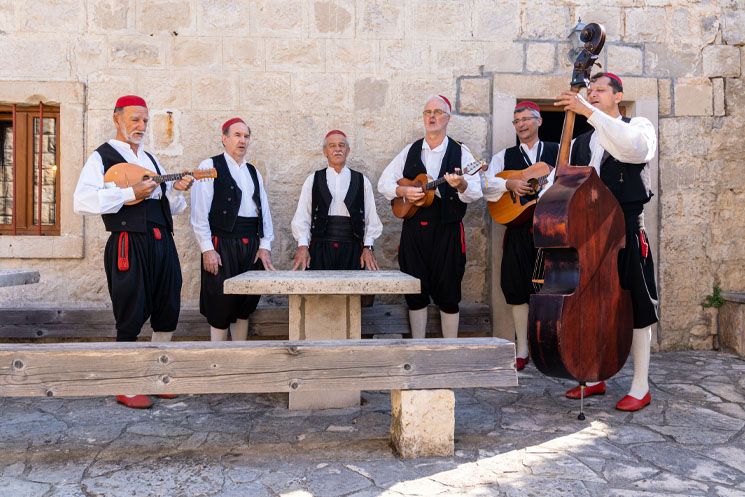
The Dalmatian lijerica is one of the most recognizable traditional musical instruments of southern Croatia, particularly in the Dubrovnik littoral and Konavle. This simple yet remarkably expressive string instrument has accompanied folk dance and song for centuries, holding an important place in the region's cultural identity. The lijerica has three strings and is played with a bow, producing a characteristic sound that is powerful, rhythmic, and piercing. What makes playing the lijerica special is the manner of performance — the player determines not only the melody but also the rhythm of the dance, often accentuating the dancers' movements. For this reason, the lijerica is not merely a musical instrument, but a key element in performing traditional dances, especially the Konavle kolo. In the past, the lijerica was indispensable at village gatherings, weddings, and holidays. Playing it was passed down through oral tradition, from generation to generation, without written notation, which gives it added authenticity. Each player brought their own style, so melodies often varied depending on the place and performer. Beyond Konavle, the lijerica is also present throughout the wider Dubrovnik region, where it is used to accompany dances and folk customs. Today, it is most often heard as part of folklore performances and cultural events, where it is preserved as a valuable part of intangible heritage.
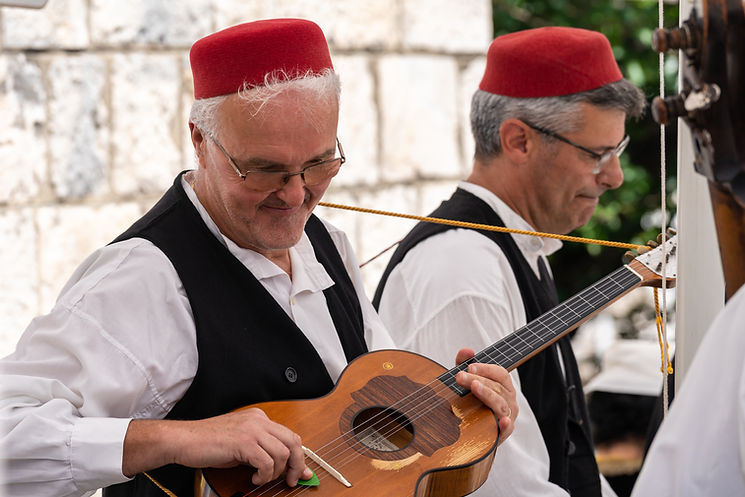
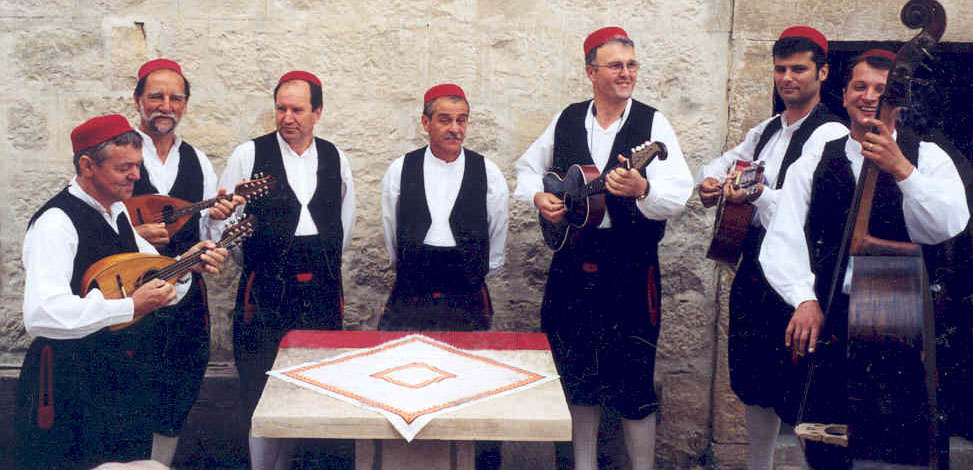
Tamburica
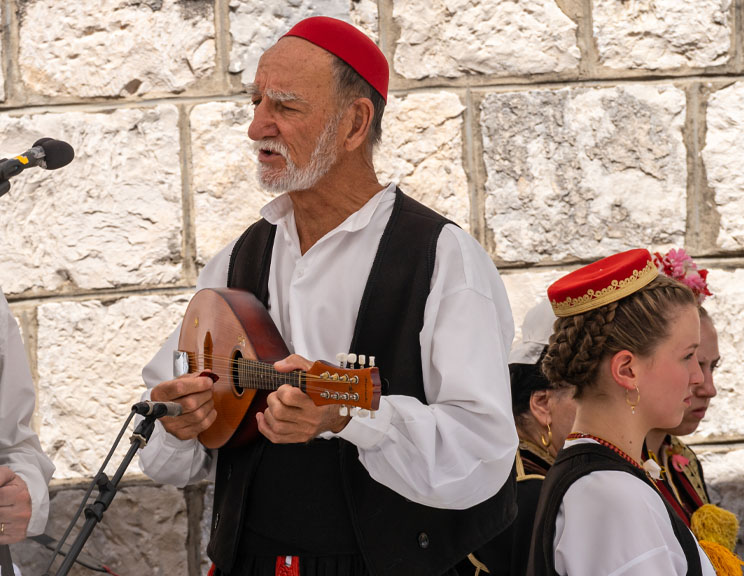
The Dalmatian tamburica holds a special place in the musical tradition of southern Croatia, even though it is more often associated with the continental regions. In Dalmatia and Konavle, the tamburica found its place as an accompaniment to traditional singing and folklore, adapting to the local musical expression. It is a string instrument with a bright, warm sound, played by plucking the strings. In the Dalmatian context, the tamburica is most often used to accompany vocals, whether in Konavle songs or other forms of traditional singing. Unlike the classical tamburica ensembles of Slavonia, its role in Dalmatia is more modest and subtle, focused on emphasizing rhythm and melody rather than dominant instrumental performance. It is particularly interesting that in Konavle, the tamburica often appears in combination with other elements of traditional music, including multi-part singing and folk dances. In this way, it becomes part of a broader cultural picture, in which music, dance, and customs are intertwined. Throughout history, the tamburica has been present on various occasions — from family gatherings and weddings to public performances and folklore events. Although it is not originally a Dalmatian instrument, its adaptability has allowed it to become an accepted part of local tradition. Today, the Dalmatian tamburica continues to live on through the work of cultural and artistic societies and folklore groups, where it plays an important role in preserving musical heritage. It represents a blend of different musical influences, while also standing as proof that tradition can evolve while remaining true to its original spirit
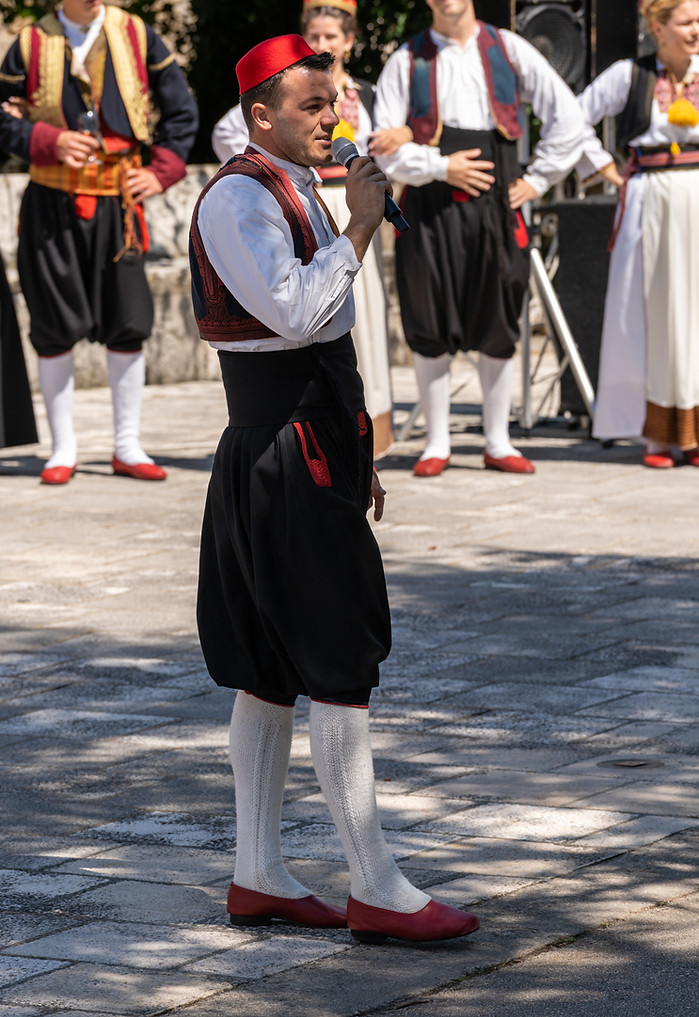
Presentation of Wedding Customs
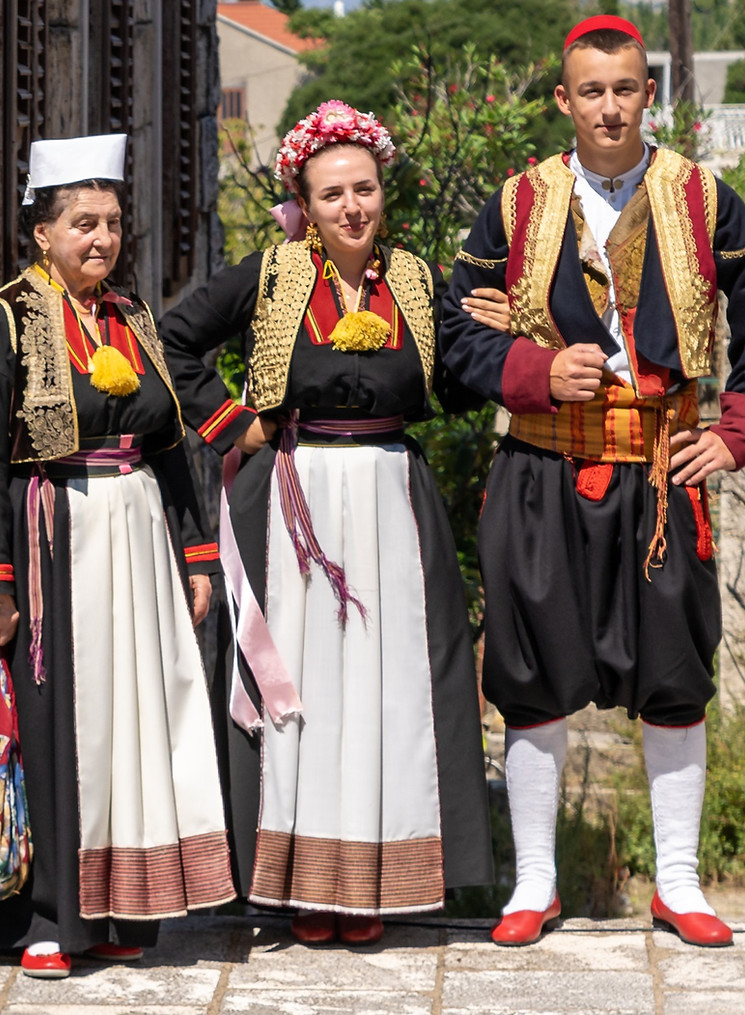
This authentic program shows what wedding customs, folk costumes, songs, and dances once looked like during wedding celebrations.
The performance depicts parts of the wedding ceremony — from the arrival of the wedding party, through song and dance, to the symbolic customs that once accompanied weddings in Konavle.
One of the best-known customs still practiced today is the Konavle wedding toast. The toast represents the most solemn part of the Konavle wedding celebration. It is delivered by the "zdravičar" (toast-giver) before the assembled wedding guests, just before the main meal is served. During the toast, the guests stand holding glasses of wine and take part by responding to the host of the wedding. The text of the toast has traditionally been passed down in an almost unchanged form and consists of several sections, each separated by the toast-giver's call: "Kako ono i 'oće akobogda" ("As it is meant to be, God willing"), to which those gathered respond: "Amen dabogda!" ("Amen, God willing!").


Konavle Embroidery
The Tradition of Silk and the Identity of Konavle
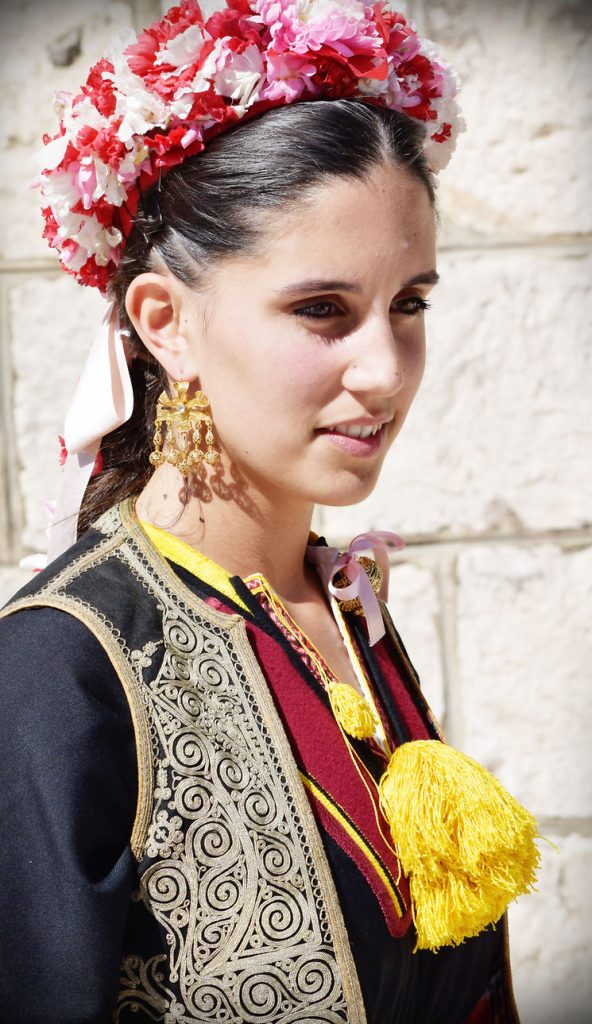
Konavle embroidery is one of the most recognizable elements of Konavle's cultural heritage and a powerful symbol of local identity. It once served as the primary decoration of women's folk dress, and today it is regarded as valuable intangible heritage, bearing witness to centuries of skill and the aesthetic expression of Konavle's women.
Distinguished by its rich silk motifs, the embroidery was most often worked onto the bodice and sleeves of the shirt, creating a harmonious and refined look for the traditional costume. Its making was deeply woven into everyday life: from the earliest age, girls learned the skill of embroidering and producing silk thread, gradually absorbing this knowledge from the older women in their family and community. Before marriage, they would prepare their entire trousseau, with embroidery intended for different occasions in life — from the everyday to the most solemn and transitional moments.
The richest ceremonial embroidery carried special symbolic meaning and was worn at the most important moments in life, especially at weddings, and in certain traditional customs it also accompanied other transitions in the life cycle. Over time, as the folk costume was worn less and less in daily life, the embroidered pieces began to be preserved and passed down as precious family heirlooms.
With the end of the 19th and the beginning of the 20th century, Konavle embroidery gained wider recognition beyond the local area. Thanks to growing interest in traditional handicrafts, embroidered examples of Konavle folk dress found their way into museum collections, while the embroidery technique itself spread through workshops, schools, and cooperatives, becoming a recognized example of folk textile craftsmanship.
As confirmation of its exceptional value, the skill of making Konavle embroidery and producing silk was declared an intangible cultural asset of the Republic of Croatia in 2015. Today, Konavle embroidery remains a living link between the past and the contemporary identity of Konavle — an enduring symbol of community, tradition, and cultural heritage passed down and preserved for future generations.
Silk
Silk production played an important role in the history of the Dubrovnik region, where silk first appeared during the time of the Republic of Dubrovnik, through its well-developed textile trade. In Dubrovnik, silk was prized as a luxury material, associated with the fashion influences of the leading European centers of the time and with the social elite.
In their desire to access such a way of dressing, the population of the surrounding areas, especially Konavle, developed their own production and processing of silk. As early as the Middle Ages, mulberry silkworms were raised in this region, enabling local production of the raw material. Thanks to its climatic conditions, Konavle was well suited to this demanding process, which required careful control of temperature, humidity, and feeding the silkworms with mulberry leaves.
Tijekom 18. stoljeća svila se i dalje proizvodila u kućanstvima, bojala prirodnim pigmentima te koristila u svakodnevnom i svečanom odijevanju.
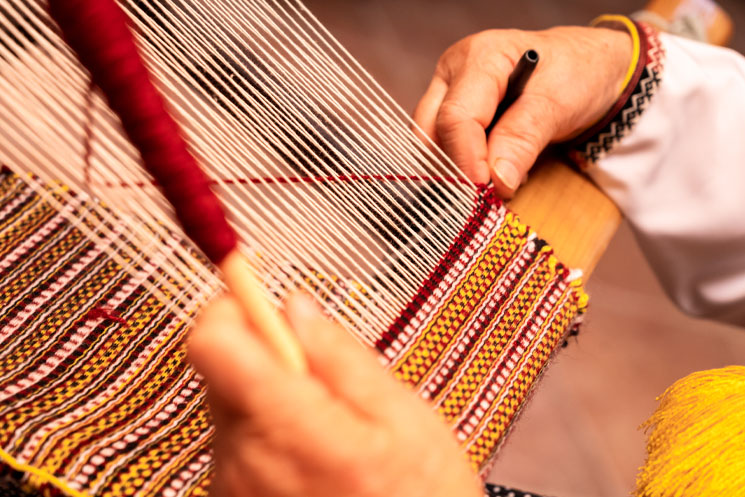
Silk cultivation and processing were most often part of household work, in which women took part. They prepared silk and used it to make items of clothing and decorations for folk dress. Over time, silk details became a recognizable part of Konavle's traditional attire, and specific decorative techniques developed that later shaped Konavle embroidery.
Iako se u širem povijesnom kontekstu svila često povezuje s utjecajima iz istočnih i srednjoazijskih područja, njezina proizvodnja na dubrovačkom prostoru bilježi značajniji razvoj u razdoblju nakon učvršćivanja vlasti Dubrovačke Republike nad Konavlima.
Traditional Jewelry of Konavle
The traditional jewelry of the Dubrovnik region, especially that of Konavle, is known for its richness of form, superb craftsmanship, and powerful symbolism. Through the centuries it was an important part of folk dress and a mark of social status and family heritage
From the 13th to the mid-20th century, Dubrovnik was a significant center of goldsmithing. Dubrovnik goldsmiths crafted numerous pieces of jewelry for the population of the Dubrovnik region and Konavle, especially during the 19th and early 20th centuries. As traditional dress gradually fell out of use, the need for such jewelry declined as well.
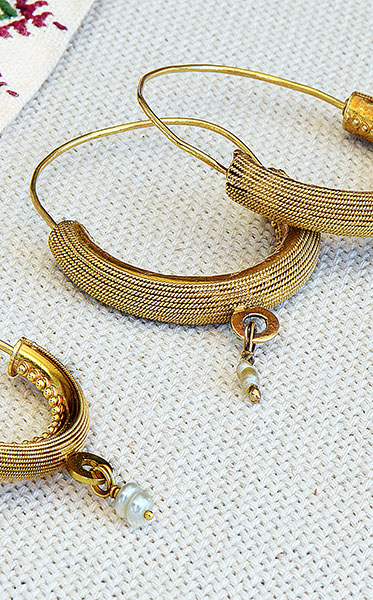
Women's jewelry in Konavle was especially varied: verižice (chain earrings), fjočice (tasseled ornaments), a plate worn at the throat, buttons, rings, and rosaries. The best-known symbol of Konavle jewelry is women's earrings — verižice and ceremonial gold fjočice, made using the filigree technique, which became a recognizable hallmark of Konavle women.
Jewelry was given as a gift at engagements and weddings and was carefully kept in family chests as a precious inheritance passed down from generation to generation. Today, traditional Konavle jewelry remains an important part of the cultural heritage and identity of Konavle.
Konavle Regional Museum
The Konavle Regional Museum (Zavičajni muzej Konavala) was founded in 1974 as the result of many years of activity and initiative by the local community, primarily through the work of the Čilipi Cultural and Artistic Society.
The museum was established with the aim of preserving, collecting, and presenting the rich cultural and historical heritage of Konavle. A particular impetus for its founding came from the need to preserve items of traditional dress, jewelry, tools, documents, and other ethnographic materials bearing witness to the way of life in this region.
Through the work of the cultural and artistic society and the engagement of local residents, a museum collection gradually took shape, which later grew into an organized regional museum.
During the Homeland War, the building was severely damaged and part of the collection lost, though part of it was saved and today forms the permanent exhibition. The museum now operates as part of the Museums and Galleries of Konavle, and through exhibitions and educational programs it actively passes on knowledge of this heritage to new generations.