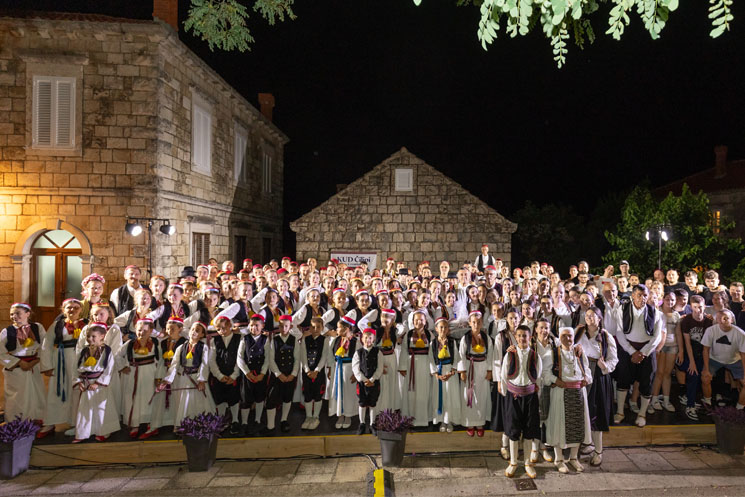
KUD Čilipi
A STORY LASTING 70 YEARS
The Cultural and Artistic Association (KUD) of Čilipi was founded in 1967, continuing the work and traditions of the "Vladimir Nazor" Cultural and Educational Society, which had been established in 1954. Thanks to its activities and the dedicated efforts of numerous generations, a significant part of the rich and diverse cultural heritage of Konavle can still be experienced today.
Major changes in Konavle began in the 1960s, a period marked by the rapid development of tourism in the Dubrovnik region. Several key factors significantly impacted the local lifestyle such as the opening of Čilipi Airport in 1962., the arrival of electricity in rural settlements and the construction of the Adriatic Highway (Jadranska magistrala). Parallel to this development, travel agencies grew in influence, most notably Atlas. It was at their initiative in 1964 that the idea emerged to organize folklore performances every Sunday in the square in front of St. Nicholas Church in Čilipi.
The first performances took place in 1967 and quickly became an indispensable part of Dubrovnik’s tourism offering. In a short time, a rich dance and musical repertoire was formed, including both traditional Konavle dances: (Potkolo, Poskočica, Čičak) and modern dances (namiguša, and the waltz). Musical accompaniment was provided by a tamburica ensemble and traditional instruments such as the mješnica (bagpipes) and later the lijerica.
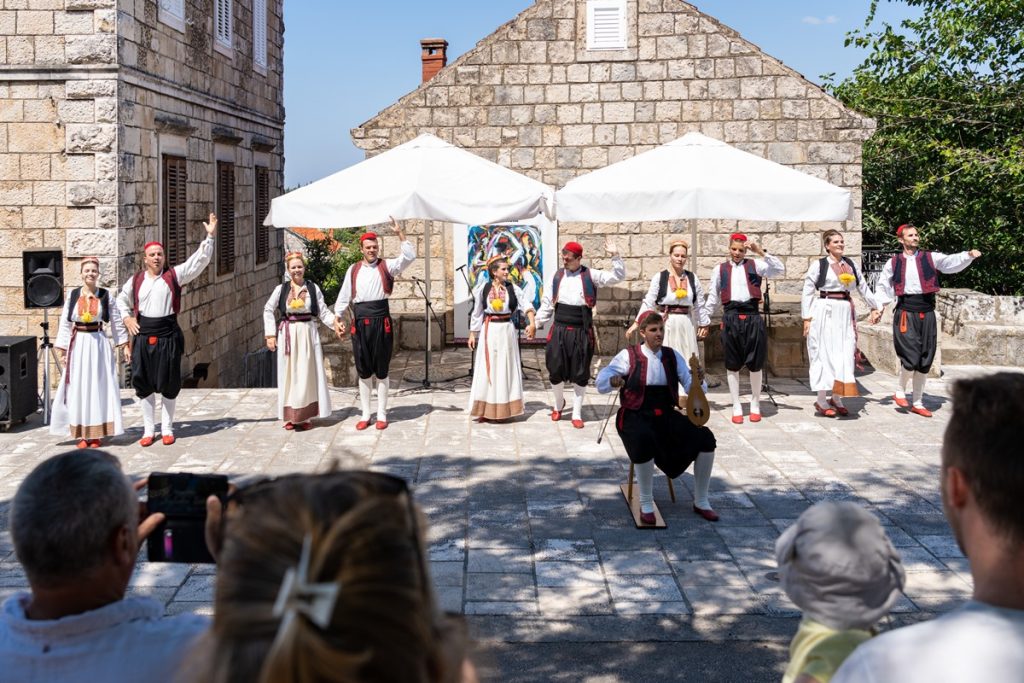
A special contribution to the preservation of folklore was made by the teacher Niko Skurić. In the early 20th century, he systematically worked on collecting and teaching traditional songs and dances, laying the foundations for the future of folklore in the region.
Beyond the dance performances, the ethno fair became a vital part of the program. Here, traditional handmade products—most notably the famous Konavle embroidery—were showcased and sold. The visual appeal of the event was enhanced by the Konavle national costume, worn by performers and locals alike, preserving the authenticity and spirit of tradition.
Despite historical challenges and generational shifts, the folklore tradition in Čilipi has endured. Performances were interrupted in 1991 due to the Homeland war, occupation by Serbian and Montenegrian army and displacement, but were revived as early as 1993. During this period, the repertoire was partially adapted, such as by introducing the Linđo—the traditional dance of the Dubrovnik region accompanied by the lijerica and hall dance Dubrovnik Kontradanca.
Today, the KUD Čilipi remains active, nurturing traditions and passing them on to younger generations. The Sunday folklore performances remain a symbol of the town and a vital part of the cultural identity of Konavle, bringing together locals and visitors in a celebration of music, dance and community.